2026: The Era of Instant Help
Peak 2026 moment: Seeing a woman, working for Pronto dashing to get to work
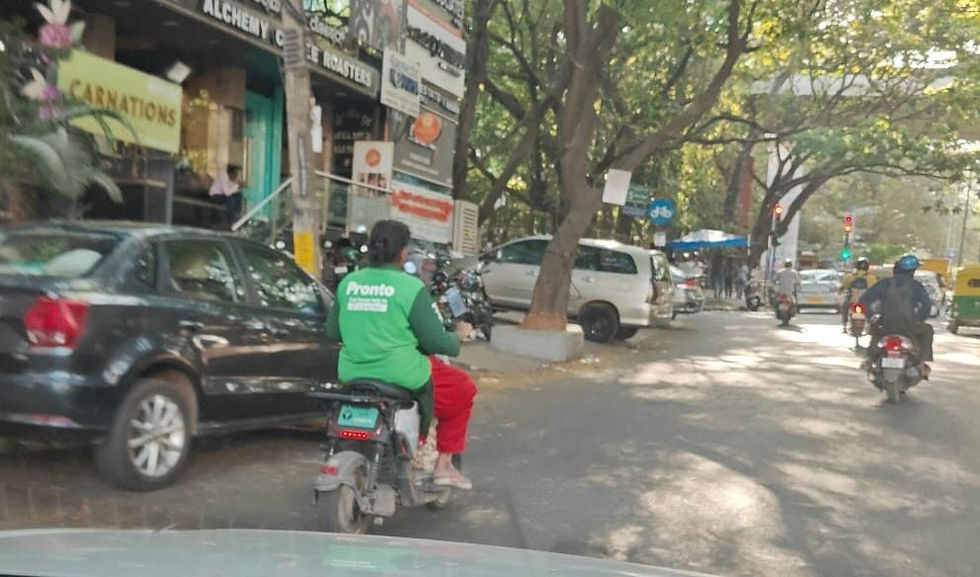
In the past one year since launch, India's instant help services have scaled phenomenally: ~2 million monthly orders collectively across Snabbit, Pronto and Urban Company's InstaHelp. These app-based platforms dispatch trained domestic workers for tasks like cleaning, dishwashing, laundry, and meal preparation within minutes. If 2023 was the year for quick commerce, then this year seems to be the year for instant help - emerging to be one of the fastest-growing segments in India's startup ecosystem. Even my mother-in-law raves about their services. So its a GenX, Millennial and GenZ problem solved, all at once! Key problems solved:
1. 𝐈𝐧𝐟𝐨𝐫𝐦𝐚𝐭𝐢𝐨𝐧 𝐚𝐬𝐲𝐦𝐦𝐞𝐭𝐫𝐲 between customer demand, especially from urban households and the availability of quality supply, especially in case of occasions, emergencies, absenteeism. As a woman managing a household, I can honestly say that managing my maids is harder than managing my work at office
2. 𝐅𝐥𝐞𝐱𝐢𝐛𝐥𝐞 𝐰𝐨𝐫𝐤 𝐨𝐩𝐩𝐨𝐫𝐭𝐮𝐧𝐢𝐭𝐲 for "Supply", especially caregivers who are managing time between their children, upkeep of their own homes and need the extra buck(s)
3. 𝐐𝐮𝐚𝐥𝐢𝐭𝐲 / 𝐒𝐭𝐚𝐧𝐝𝐚𝐫𝐝𝐢𝐬𝐚𝐭𝐢𝐨𝐧, especially balancing standardisation with personalisation. I am in awe of how clean and professional the helps are - in fact better than my maid who has been coming regularly since years! During MBA, my favourite class was Marketing Services by Prof piyush kumar. I learnt that within services - the essence lies in the “how” not necessarily the “what.” Tons of companies (eg. The Maid Company) have failed in the past. My hope is that these company are able to quickly adapt and learn
The good news for multiple players in is that the opportunity is huge at ~$100bn domestic home services market (Redseer estimates). And, also a market least likely to be disrupted by GenAI. So there's plenty of room for many players. But of course, there are size-able risks
1. Unit economics to sustainably run the business. How will the organisational design keep costs in control. The good news in this business - there is no physical asset (eg. bank or restaurant), where the goal is to ensure max utilisation
2. How to ensure service quality, consistently. Home services are unique problems - they cannot be inventoried, patented, displayed, and readily communicated. Urban company seems to have nailed it in most categories, a playbook that can now be extended here.
3. Managing human resources - especially selection, retention, service delays, adapting to different customer expectations. And, capacity management with fluctuating demand
One of the big benefits of staying in India (versus working abroad) is our quality of life, due to availability of house help. And, this just got a little bit even more convenient!


Comments